High Protein Egg Fried Rice Meal Prep (Cheap & Better Than Takeout)
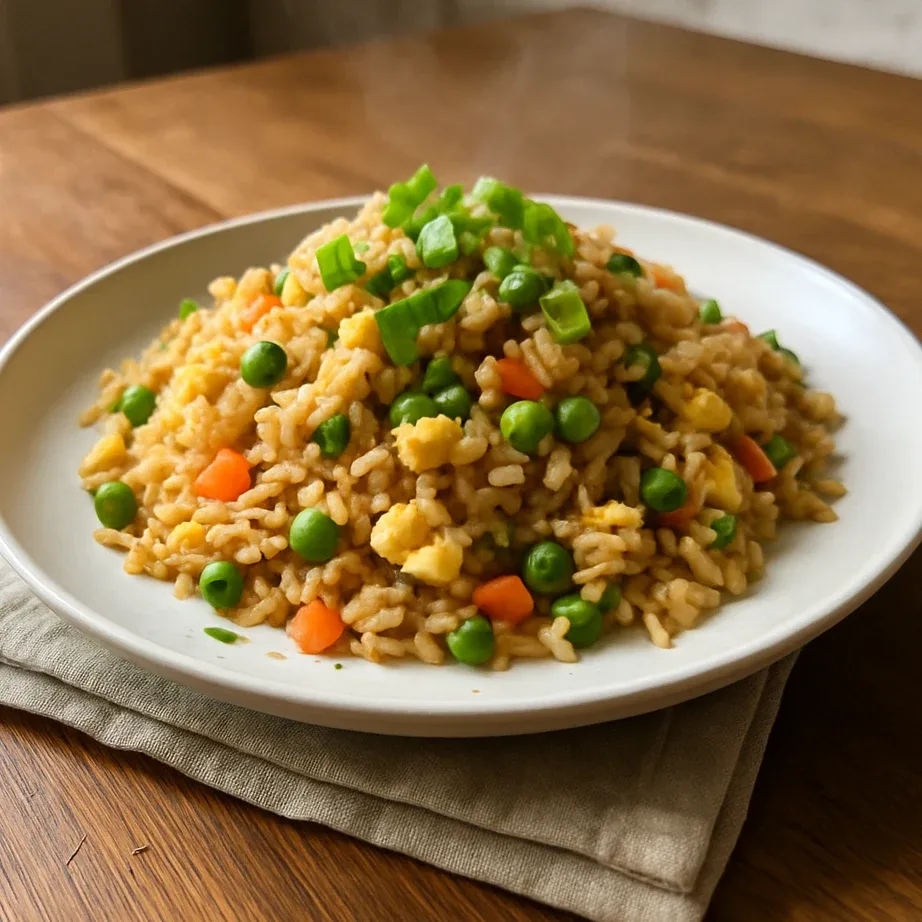
Takeout fried rice costs $12 to $15 a container, sits heavy in your stomach, and honestly? You can make it better at home for about $2. I learned this the hard way after my third week of ordering delivery because I was “too tired” to cook. But here’s what changed: I made a massive batch of high protein egg fried rice on Sunday, portioned it into containers, and suddenly I had five ready-to-heat dinners that cost less than one takeout order. The protein hits 30+ grams per serving, it tastes even better than the restaurant version, and it takes just 20 minutes from pan to plate.
This isn’t some complicated recipe that requires a wok and special technique. It’s straightforward, budget-friendly cooking that delivers real nutrition without feeling like “diet food.” The eggs are your protein anchor, the rice is your base, and everything else is flexible depending on what’s in your fridge. That’s the beauty of fried rice: it adapts to you, not the other way around.
Why This Recipe Earns a Permanent Spot in Your Rotation
- 30+ grams of protein per serving from eggs, making this a complete, filling meal that keeps you satisfied for hours
- Ready in 20 minutes, which means faster than delivery, no waiting time, and dinner on the table on busy weeknights
- Costs about $2 per serving compared to $12 to $15 for takeout, so meal prepping actually saves real money
- Meal prep champion: makes 4 to 5 servings at once, reheats beautifully, and stays fresh for five days in the fridge
What Makes This High Protein Egg Fried Rice So Different
The protein secret is simple: whole eggs. Four large eggs deliver roughly 24 grams of protein on their own, and when you scramble them directly into hot rice, they coat every grain and add richness that takeout places stretch with oil and fillers. The yolk creates natural fat that makes the rice flavorful without needing excessive oil, and the whites add lean protein that keeps you full without the crash that comes from carbs alone.
I also add a serving of Greek yogurt stirred in at the end, which sounds strange but isn’t. Just a tablespoon adds another 3 to 4 grams of protein and creates an almost creamy texture that mimics the mouthfeel of restaurant fried rice without dumping it in oil. You won’t taste it directly, but you’ll notice your bowl feels more satisfying and tastes richer than plain egg fried rice.
What You’ll Need
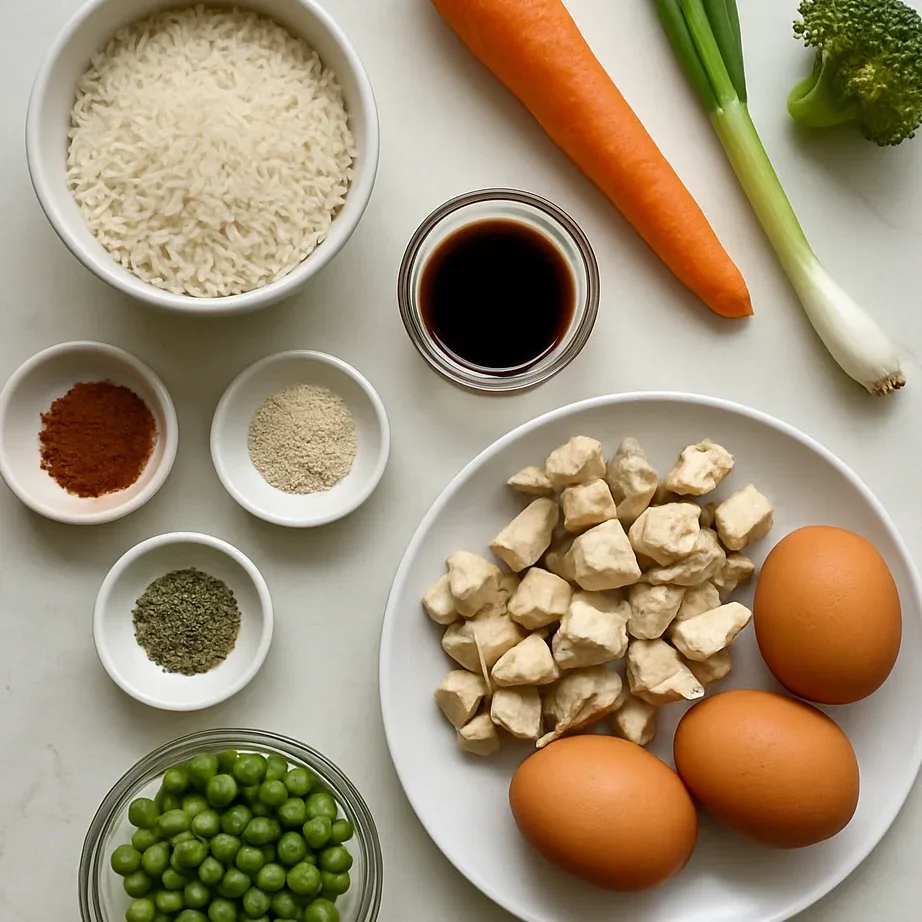
The ingredient list is short because fried rice thrives on restraint and quality basics. Everything here is something you probably have on hand, and if you don’t, it’s inexpensive and useful in other meals too.
- 3 cups cooked rice, cooled to room temperature (day-old is best; warm rice gets mushy)
- 4 large eggs, whisked together with a pinch of salt and pepper
- 2 tablespoons ghee or sesame oil, for flavor and heat tolerance
- 1 medium onion, diced fine so it cooks quickly
- 1 cup mixed frozen vegetables (peas, carrots, corn), which cook faster than fresh and are just as nutritious
- 2 cloves garlic, minced
- 3 green onions, sliced (plus extra for garnish)
- 3 tablespoons low-sodium soy sauce (adjust to taste)
- 1 teaspoon fish sauce (optional but highly recommended for depth)
- 1 tablespoon plain Greek yogurt, stirred in at the very end
- Pepper and red pepper flakes to taste
The rice is your foundation, so use cold, day-old rice if you can. Fresh rice is too moist and will steam rather than fry, which means gummy texture instead of that light, separated-grain texture you want. If you’re cooking rice fresh, spread it on a sheet pan and let it cool completely, then refrigerate for at least an hour. Frozen vegetables are genuinely better here than fresh because they cook instantly and don’t release extra moisture into your pan.
How to Make High Protein Egg Fried Rice in 20 Minutes
1. Heat your pan and scramble the eggs first. Set a large skillet or wok-style pan over medium-high heat. Add one tablespoon of ghee, then pour in your whisked eggs. Don’t touch them for 20 seconds, then gently scramble them until they’re just set but still slightly wet. They’ll continue cooking once you add the rice. Transfer them to a clean plate.
2. Sauté your aromatics. Add the remaining tablespoon of ghee to the same pan. Add diced onion and cook for 2 to 3 minutes until it’s starting to soften and turn translucent at the edges. Stir in minced garlic and cook for another 30 seconds until fragrant. This base of caramelized onion and garlic is what separates good fried rice from bland.
3. Add the frozen vegetables and let them char slightly. Dump in your mixed vegetables and let them sit undisturbed for 1 to 2 minutes so they pick up some color and develop flavor. This step seems small but creates complexity that takeout places rush through. Stir and cook for another 2 minutes until heated through.
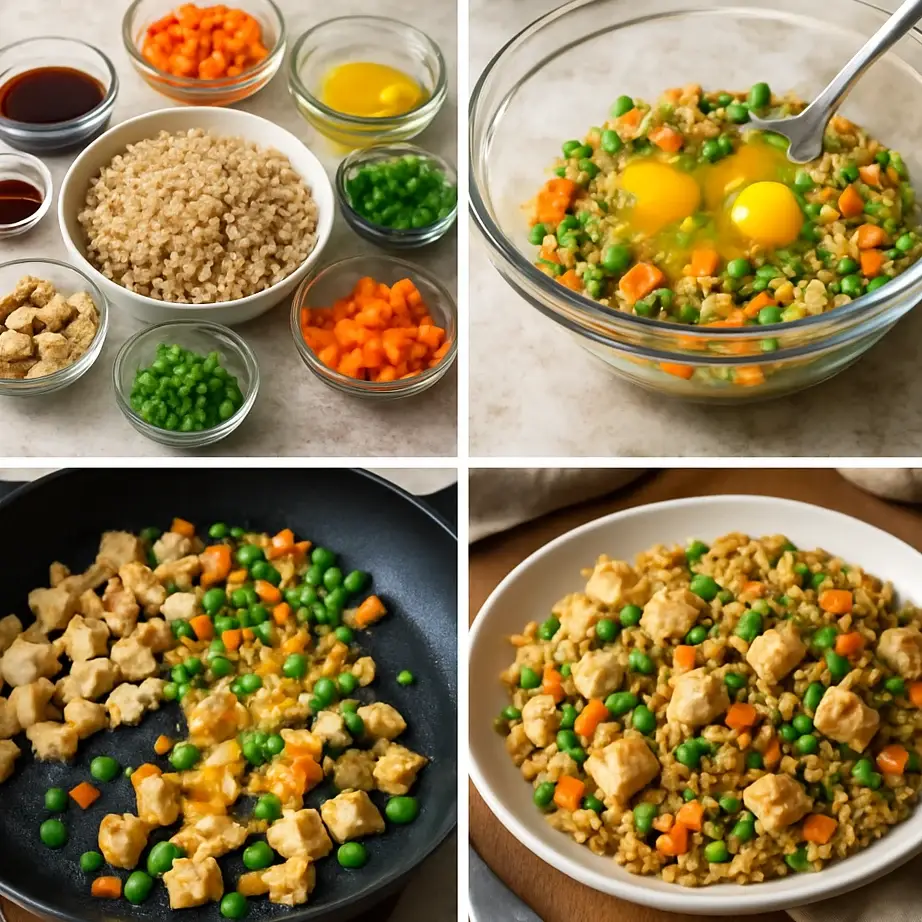
4. Break up your rice and add it to the pan. Add your cold, cooked rice to the pan. It’ll probably come in clumps, so use your spoon or spatula to break it up as it heats, spreading the grains so they warm evenly and start to toast slightly against the hot pan. This is where the real cooking happens, and it takes about 3 to 4 minutes. You’re not steaming the rice; you’re letting it interact with the heat directly.
5. Stir in soy sauce, fish sauce, and the cooked eggs. Drizzle soy sauce and fish sauce over the rice, stirring constantly to distribute evenly. Fish sauce sounds intimidating, but it’s just fermented anchovy liquid that adds savory umami depth without tasting fishy. Add your reserved scrambled eggs back to the pan and toss everything together for another minute so the eggs break up into small pieces throughout.
6. Finish with green onions and Greek yogurt. Remove the pan from heat. Stir in most of the sliced green onions, then fold in a tablespoon of plain Greek yogurt until it’s fully incorporated. This last step adds creaminess and another dose of hidden protein. Taste and adjust seasoning with extra soy sauce, fish sauce, pepper, or red pepper flakes depending on what your palate wants.
Emma’s Pro Tips for Perfect Results Every Time
- Make it spicier if you want: Add sriracha, gochujang, or fresh bird’s eye chili. A tablespoon of gochujang mixed into the soy sauce creates Korean-style fried rice that’s incredible, and it doesn’t change the protein count.
- Store it smart for the whole week: Portion into glass containers immediately after cooking while it’s still warm (it’ll keep from sticking together as it cools). It stays fresh for five days in the fridge and reheats in the microwave in 90 seconds. Add a splash of water before microwaving if it seems dry.
- Upgrade the protein further: If you want even more protein, add 1 cup of diced rotisserie chicken, shrimp, or ground turkey when you add the vegetables. This pushes protein to 40+ grams per serving and still costs less than takeout.
Nutrition Per Serving (Without Protein Add-Ins)
- Protein: 32g
- Calories: 385
- Carbohydrates: 38g
- Fat: 12g
These estimates are based on a standard serving size of about 1.5 cups and assume medium-grain white rice and large eggs. Exact numbers vary depending on your specific brands and how generously you portion.
What to Serve Alongside Your Bowl
Fried rice is essentially a complete meal on its own, but a simple side or drink rounds it out. Try a quick cucumber salad with rice vinegar and sesame oil, a handful of sliced avocado on the side, or a small bowl of miso soup if you want something warm and salty. If you’re making this for dinner rather than meal prep, a cold glass of unsweetened iced tea or sparkling water with lime cuts through the richness perfectly.
Frequently Asked Questions
Can I use egg whites only to lower the calories? You can, but the yolks contribute most of the flavor and richness that makes this feel like takeout rather than diet food. If you’re tracking macros closely, swap one whole egg for two egg whites instead of removing yolks completely. You’ll still get great flavor with fewer calories.
What type of rice works best? Day-old white or brown rice both work. Jasmine rice is traditional and creates a slightly floral flavor. Avoid sushi rice, which is too sticky, and avoid rice that’s been refrigerated for more than four days, as it starts to harden and won’t cook evenly.
Can I meal prep the components separately and assemble later? Yes, and honestly, this is what I do sometimes. Cook the rice, chop vegetables, and beat the eggs, then store them separately for up to three days. Fry it together when you want fresh-tasting rice. It takes the same 20 minutes but tastes fresher.
Does it taste good cold, or does it have to be reheated? Cold fried rice is actually amazing for packed lunches, especially if you add an extra splash of soy sauce or a squeeze of lime. It’s less creamy cold, but the flavors are just as good. Reheat in the microwave, on the stovetop with a splash of water, or eat it straight from the fridge depending on your mood.
Can I add other proteins like shrimp or tofu? Absolutely. Cooked shrimp and firm tofu both work beautifully. Add them along with the vegetables, or if using raw shrimp, cook them in the oil before adding the onion. This keeps the high protein angle strong and lets you rotate proteins throughout the week so you don’t get bored.
What about using leftover cheap high protein meal prep proteins? This is actually one of my favorite uses for leftover shredded chicken, ground turkey, or even beef. Add it to the vegetables stage and let it warm through. Since it’s already cooked, you’re just heating it, which takes zero extra time and ups your protein to 40+ grams without changing the recipe structure.
The Bottom Line
High protein egg fried rice meal prep is one of those recipes that sits at the intersection of everything that matters: it’s cheap, it’s fast, it tastes genuinely delicious, and it delivers serious nutrition without asking you to eat plain chicken and broccoli for the hundredth time. Make a batch on Sunday, portion it out, and you’ve solved weeknight dinner for five days. Your body gets the protein it needs to build muscle and stay full, your budget stays intact, and you get to skip the delivery fees and the guilt that comes with ordering takeout three times a week.
This recipe has been tested dozens of times in my kitchen on nights when I’m tired, busy, or both. It never disappoints. Try it this week, save it to your Pinterest board, and let me know how it turns out in the comments. If you adapt it with your own vegetables or protein, I’d love to hear what you added. And if you’re looking for more high protein meal prep ideas that are just as simple, you know where to find me.
High Protein Egg Fried Rice Meal Prep (Cheap & Better Than Takeout)
Equipment
- large skillet or wok-style pan
- mixing bowl
- spoon or spatula
Ingredients
- 3 cups cooked rice, cooled to room temperature
- 4 large eggs
- 2 tablespoons ghee or sesame oil
- 1 medium onion, diced fine
- 1 cup mixed frozen vegetables (peas, carrots, corn)
- 2 cloves garlic, minced
- 3 green onions, sliced
- 3 tablespoons low-sodium soy sauce
- 1 teaspoon fish sauce
- 1 tablespoon plain Greek yogurt
- Pepper and red pepper flakes to taste
- Salt
Instructions
- Step 1: Heat your pan over medium-high heat. Add one tablespoon of ghee, then pour in whisked eggs. Don’t touch for 20 seconds, then gently scramble until just set but slightly wet. Transfer to a plate.
- Step 2: Add remaining ghee to pan. Add diced onion and cook 2-3 minutes until translucent. Stir in minced garlic and cook 30 seconds until fragrant.
- Step 3: Add frozen vegetables and let sit undisturbed 1-2 minutes to char slightly. Stir and cook another 2 minutes.
- Step 4: Add cold rice to pan, breaking up clumps with spoon. Let rice heat and toast for 3-4 minutes, stirring occasionally.
- Step 5: Drizzle soy sauce and fish sauce over rice, stirring constantly. Add scrambled eggs back and toss everything together for 1 minute.
- Step 6: Remove from heat. Stir in green onions, then fold in Greek yogurt until incorporated. Taste and adjust seasoning as needed.