High Protein Sheet Pan Meal Prep (One-Pan, Minimal Cleanup)
There’s a moment on Sunday evening when I’m standing in my kitchen surrounded by empty containers and a full fridge, and I think: there’s got to be a better way. That’s exactly when sheet pan meals became my secret weapon. No separate pots simmering on the stovetop. No washing a mountain of dishes. Just one large pan, a collection of high-protein ingredients, and dinner sorted for the entire week.
A high protein sheet pan meal prep isn’t just efficient it’s a complete game-changer for anyone trying to eat well without eating the same bland chicken breast four nights in a row. You roast everything together, the flavors mingle, and you end up with meals that taste genuinely good, not like punishment for having goals.
This approach delivers around 35 grams of protein per serving, keeps carbs balanced, and means you’re actually excited about leftovers. That’s the dream, right?
Why This One Earns a Spot in Your Rotation
- Packed with protein: Every serving hits 35g+ protein from multiple sources, so you stay full for hours
- Ready in under 40 minutes: Mostly hands-off roasting time while you handle other things
- One pan, seriously: No juggling multiple burners or stacks of dishes at 10 p.m.
- Meal prep gold: Makes 4-6 portions that reheat beautifully throughout the week
- Budget-conscious: Uses affordable proteins and seasonal vegetables without feeling cheap
What Makes High Protein Sheet Pan Meal Prep Actually Work
Sheet pan dinners work because they’re efficient, not because they’re trendy. When you roast lean protein alongside vegetables and a carb source on one pan, the juices from the protein season everything as it cooks. You’re not eating separate components. You’re eating a real meal that happens to have been prepared all at once.
Table of Contents
The protein angle matters here. Unlike scattered meal prep where you might grab a rice bowl without enough protein to keep you satisfied, a sheet pan meal forces you to plate them together. The protein doesn’t get forgotten on the counter. It’s built into the meal by default.
What You’ll Need
Here’s the beautiful part: nothing fancy. You’re using ingredients you probably already have or can grab at any grocery store.
For the protein base:
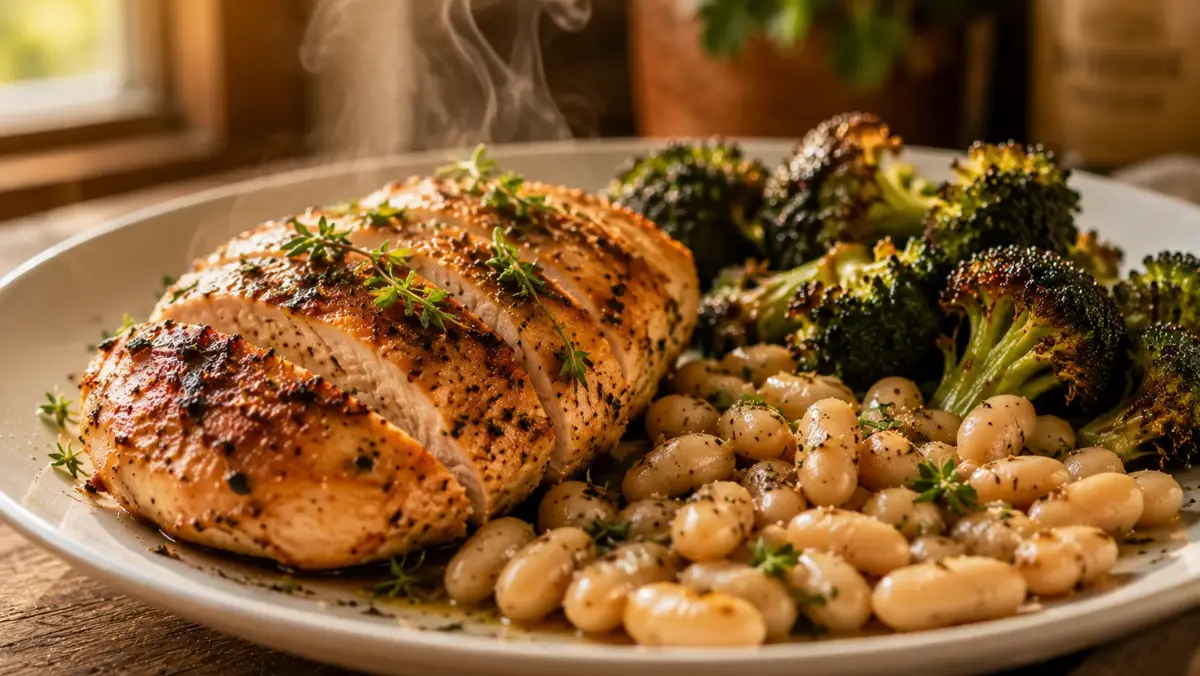
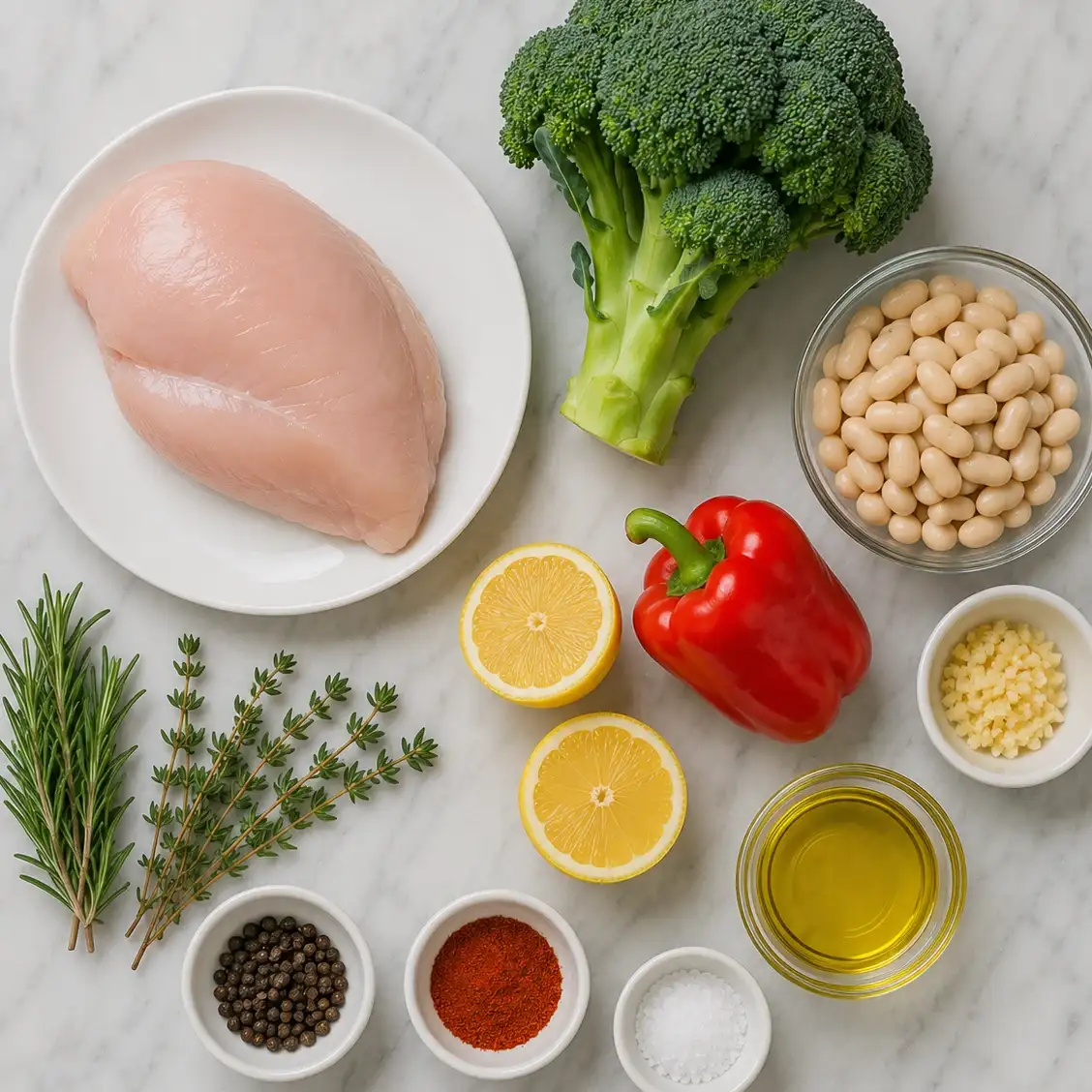
- 2 pounds lean chicken breasts or thighs, cut into bite-sized chunks (chicken thighs stay more moist during reheating)
- 1 pound salmon fillets or cod, cut into portions (or swap for ground turkey if budget is tight)
- 1 can white beans or chickpeas, drained and rinsed (adds fiber and extra plant-based protein)
For the vegetables:
- 3 cups broccoli florets
- 2 medium zucchini, cut into rounds
- 1 red bell pepper, chopped
- 1 medium red onion, cut into wedges
- 2 cups cherry tomatoes
For seasoning and roasting:
- 3 tablespoons olive oil
- 2 teaspoons garlic powder
- 1 teaspoon paprika
- 1 teaspoon dried oregano
- Salt and pepper to taste
- Fresh lemon juice (adds brightness without extra calories)
Optional additions that boost protein:
- Sprinkle of hemp seeds or pumpkin seeds after roasting
- Crumbled feta cheese
- Greek yogurt-based dressing for serving
How to Build Your Sheet Pan Meal Prep
Step 1: Prep your workspace and preheat. Get your oven to 425°F. Line two large sheet pans with parchment paper so cleanup stays minimal. Pat your chicken and fish dry with paper towels — this helps them brown better instead of steaming.
Step 2: Season the protein. Place chicken on one pan, fish on the other. Drizzle with 1 tablespoon olive oil each and season generously with garlic powder, paprika, oregano, salt, and pepper. Toss to coat evenly. This takes two minutes but makes all the difference.
Step 3: Arrange vegetables around the protein. Distribute your broccoli, zucchini, bell pepper, onion, and tomatoes around the chicken and fish. Drizzle remaining olive oil over vegetables, then season with salt, pepper, and a pinch more garlic powder.
Step 4: Roast everything. Put both pans in the oven for 18-22 minutes, depending on your oven’s personality. The chicken should reach 165°F internally, and the fish should flake easily with a fork. Vegetables should have light char on the edges.
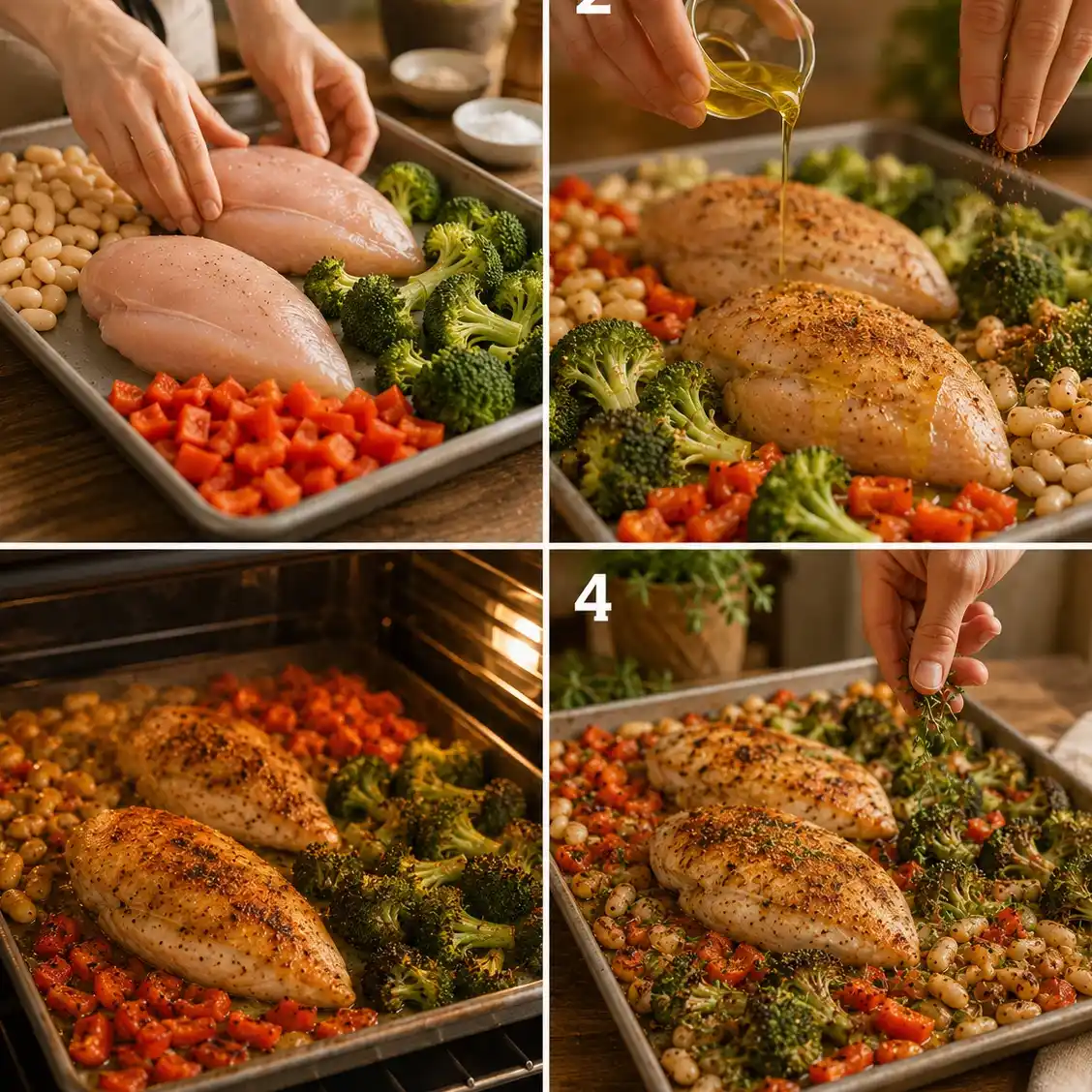
Step 5: Rest and squeeze. Let everything sit for 3-5 minutes. This sounds unnecessary but it genuinely helps retain moisture. Squeeze fresh lemon juice over everything while still warm.
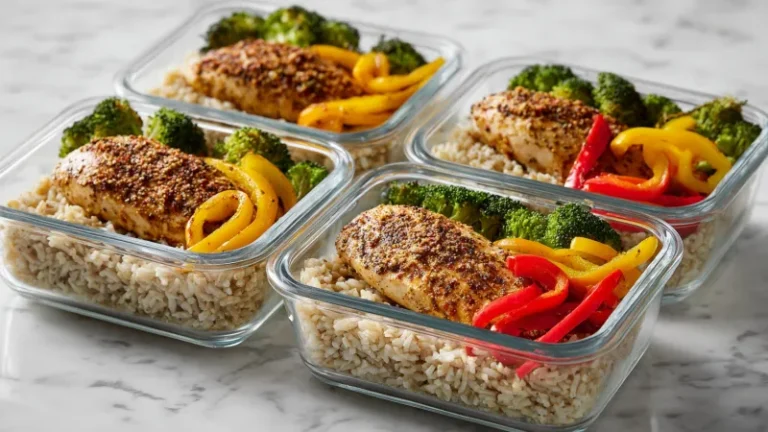
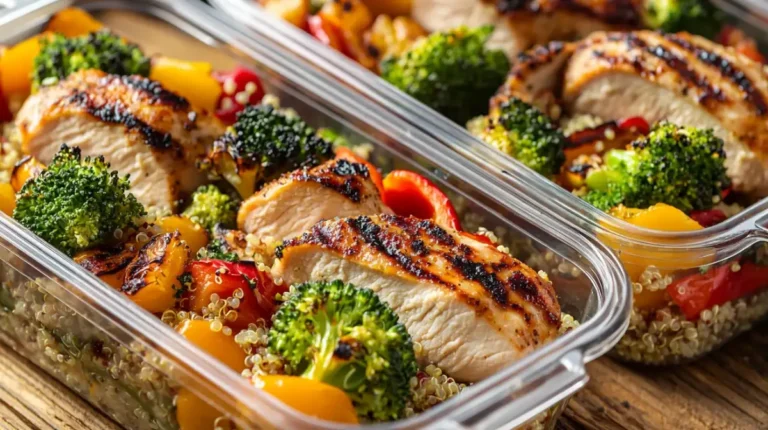
Step 6: Cool and portion. Let cool for 10 minutes, then divide into glass containers. Don’t pack them too tightly a little space helps them reheat evenly.
Emma’s Pro Tips
Swap proteins based on what’s on sale. Chicken thighs cost less than breasts and don’t dry out as badly during reheating. Canned salmon works in a pinch. Ground turkey or lean beef work too. The method stays the same, just adjust cooking time slightly for ground meat.
Add your beans during the last 10 minutes of roasting. Toss the drained canned beans in a bit of olive oil, garlic, and seasoning, then add them to the pan halfway through. They warm through perfectly without getting mushy, and they add fiber plus extra plant-based protein without feeling like a “health” addition.
Reheat in a 350°F oven rather than the microwave. Yes, it takes longer. It’s worth it. Spread your portion on a small pan, cover loosely with foil, and heat for about 8 minutes. Everything stays moist and tastes like you just made it, not like leftover something.
Protein Breakdown: Why This Meal Actually Keeps You Full
Let’s talk numbers because this is where sheet pan meal prep gets practical. The chicken alone brings 35 grams of protein per 6-ounce portion. The fish adds another 25 grams per 4-ounce fillet. Add the beans, and you’re hitting close to 40 grams of protein per complete plate.
Why does that matter? Protein keeps you full for 4-5 hours because it takes longer to digest than carbs. You eat lunch at noon, and you’re not raiding the pantry at 2 p.m. looking for snacks. Your energy stays steady. Your cravings quiet down. That’s not willpower. That’s biology.
What to Serve Alongside
These sheet pan meals work beautifully with minimal additions because they’re already balanced, but here are three easy directions to take them:
Grain route: Serve over brown rice, quinoa, or farro. Adds carbs without extra cooking. Your containers stay simple.
Salad angle: Chop the leftovers and toss with greens, a simple vinaigrette, and maybe some crumbled cheese. Feels different from night one.
As-is approach: Sometimes the meal is enough. Eat it straight from the container with a slice of whole grain bread. Minimal fuss.
How to Store and Reheat Without Drying Everything Out
Glass containers with lids are your friends. Transfer cooled portions immediately after they cool slightly. They’ll keep for 4-5 days refrigerated. Label with the date if you’re meal prepping for multiple people.
Freezing works too. Most of these meals freeze beautifully for up to two months. Thaw overnight in the fridge before reheating. Just skip the tomatoes if you’re freezing they get mushy. Add fresh ones when you reheat.
For reheating, your oven is genuinely better than the microwave. Spread your portion on a small baking pan, cover loosely with foil, and heat at 350°F for about 8 minutes. Everything warms through evenly, and your protein stays moist instead of becoming rubbery.
Frequently Asked Questions
Can I prep this on a Sunday and eat it all week without getting bored?
Absolutely. The combination of protein, vegetables, and aromatics is naturally interesting. By Friday, you might add hot sauce or switch up a side, but the base doesn’t get old. People do this successfully every week.
Does the fish stay fresh as long as the chicken?
Fish is best eaten within 3 days. Chicken lasts 4-5 days comfortably. If you’re prepping for six days, make your chicken portions larger and eat the fish within the first three days, or prep fish separately on Wednesday.
Can I use frozen chicken or fish?
Yes, just thaw completely first and pat very dry. Frozen protein releases more moisture during cooking, so dry patting is crucial for browning instead of steaming.
How much does this actually cost to make?
A realistic estimate is 2.50 to 3.50 per serving, depending on your location and whether proteins are on sale. That’s often cheaper than takeout for the same nutritional quality.
Can I batch cook multiple pans at once?
Definitely. Most home ovens fit three large sheet pans if you rotate the shelves halfway through. Just watch for uneven cooking and shuffle pans around.
Does this work for feeding a family or just meal prepping for one person?
Both. The recipe scales up or down easily. A family of four might make double this amount on Sunday and eat fresh portions Monday-Wednesday, then switch to a different protein for the second half of the week.
The Real Takeaway
Sheet pan meal prep isn’t about restriction or punishment. It’s about being smart with your time and ending up with actual food that you want to eat. You spend maybe 15 minutes prepping ingredients and 25 minutes roasting. That’s it. For the next four or five days, you have complete meals ready.
Start with this version, see how it fits your schedule, then adjust seasonings or vegetables based on what you love. The method works. The protein is solid. The cleanup is minimal.
That Sunday evening moment? Instead of feeling frantic, you’ll close the oven door and know that dinner is handled. Multiple dinners. That’s the real win.
Try it this week. Share your version on Pinterest if you do. And if you’re looking for other high protein meal prep strategies or want to explore best meal prep bowls for storage, I’ve got you covered. For anyone just starting their meal prep journey, check out my guide on easy meal prep for beginners. You’ve got this.
High Protein Sheet Pan Meal Prep (One-Pan, Minimal Cleanup)
Equipment
- 2 large sheet pans
- parchment paper
- paper towels
- glass containers
Ingredients
- 2 pounds lean chicken breasts or thighs, cut into bite-sized chunks
- 1 pound salmon fillets or cod, cut into portions
- 1 can white beans or chickpeas, drained and rinsed
- 3 cups broccoli florets
- 2 medium zucchini, cut into rounds
- 1 red bell pepper, chopped
- 1 medium red onion, cut into wedges
- 2 cups cherry tomatoes
- 3 tablespoons olive oil
- 2 teaspoons garlic powder
- 1 teaspoon paprika
- 1 teaspoon dried oregano
- Salt and pepper to taste
- Fresh lemon juice
Instructions
- Step 1: Preheat oven to 425°F and line two large sheet pans with parchment paper. Pat chicken and fish dry with paper towels.
- Step 2: Place chicken on one pan and fish on the other. Drizzle each with 1 tablespoon olive oil and season with garlic powder, paprika, oregano, salt, and pepper. Toss to coat evenly.
- Step 3: Distribute broccoli, zucchini, bell pepper, onion, and tomatoes around the protein. Drizzle remaining olive oil over vegetables and season with salt, pepper, and garlic powder.
- Step 4: Roast both pans for 18-22 minutes until chicken reaches 165°F internally and fish flakes easily with a fork.
- Step 5: Let rest 3-5 minutes, then squeeze fresh lemon juice over everything.
- Step 6: Cool for 10 minutes, then divide into glass containers without packing too tightly.