High Protein Plant-Based Meal Prep for Weight Loss (Vegan-Friendly)
Let’s be honest: meal prepping on a plant-based diet used to mean boiling a batch of sad chickpeas and hoping you’d stay motivated through Wednesday. But protein-packed vegan eating doesn’t have to feel like punishment, and it definitely shouldn’t taste like cardboard.
I spent years thinking that losing weight and eating plants meant resigning myself to bland bowls and constant hunger. Then I realized the real problem wasn’t the plants, it was my approach. When you build your high protein plant-based meal prep for weight loss around whole foods that actually fill you up and taste delicious, everything changes. You stop viewing meal prep as a chore and start seeing it as the easiest way to stay on track without feeling deprived.
The secret? Layer your plant proteins strategically, season boldly, and prep once to eat well all week. This guide walks you through exactly how to do it, with recipes and strategies I’ve tested in my own kitchen through countless busy weeks.
Why You’ll Love This Approach to Vegan Meal Prep
- 25+ grams of protein per serving keeps you satisfied and stable, cutting down on afternoon snacking and cravings
- Ready in under an hour of active prep time, most of it is just chopping and letting things cook while you scroll your phone
- Costs less than $3 per meal because you’re buying dried beans, lentils, and tofu instead of specialty vegan products
- Reheats beautifully throughout the week without turning into mush or tasting like leftovers
- Works for everyone at your table, whether they’re vegan or just looking for lighter weeknight dinners
What Makes Plant-Based Proteins So Effective for Weight Loss
Here’s what took me years to understand: plant proteins aren’t weaker or less filling than animal proteins. They’re different, and when you know how to layer them, they’re actually more satisfying because they come packaged with fiber. That fiber slows digestion, keeps your blood sugar stable, and helps you feel full longer without the heaviness that can come from heavy animal products.
Table of Contents
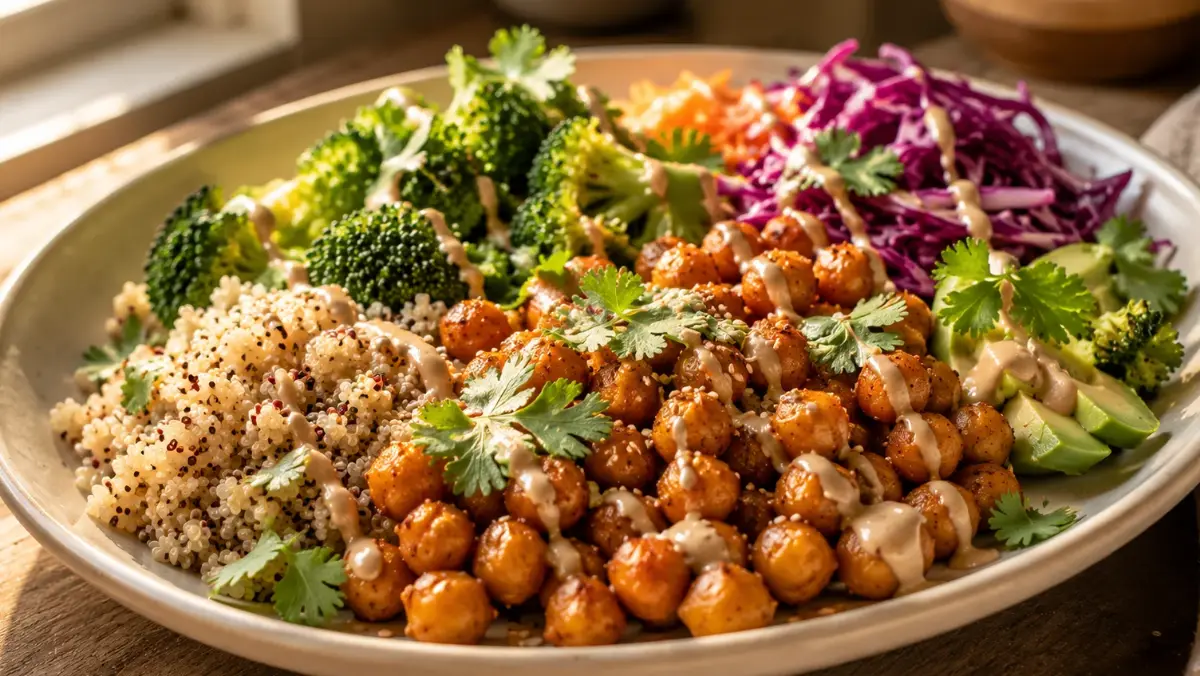
When you combine legumes (lentils, chickpeas, black beans), whole grains (quinoa, brown rice), and tofu or tempeh in one meal, you’re hitting all nine essential amino acids while keeping your calories moderate and your satisfaction high. We’re talking roughly 25 to 35 grams of protein per generous serving, depending on how you build your bowls. That’s the sweet spot where your body feels fueled, your energy stays steady, and weight loss happens without the drama.
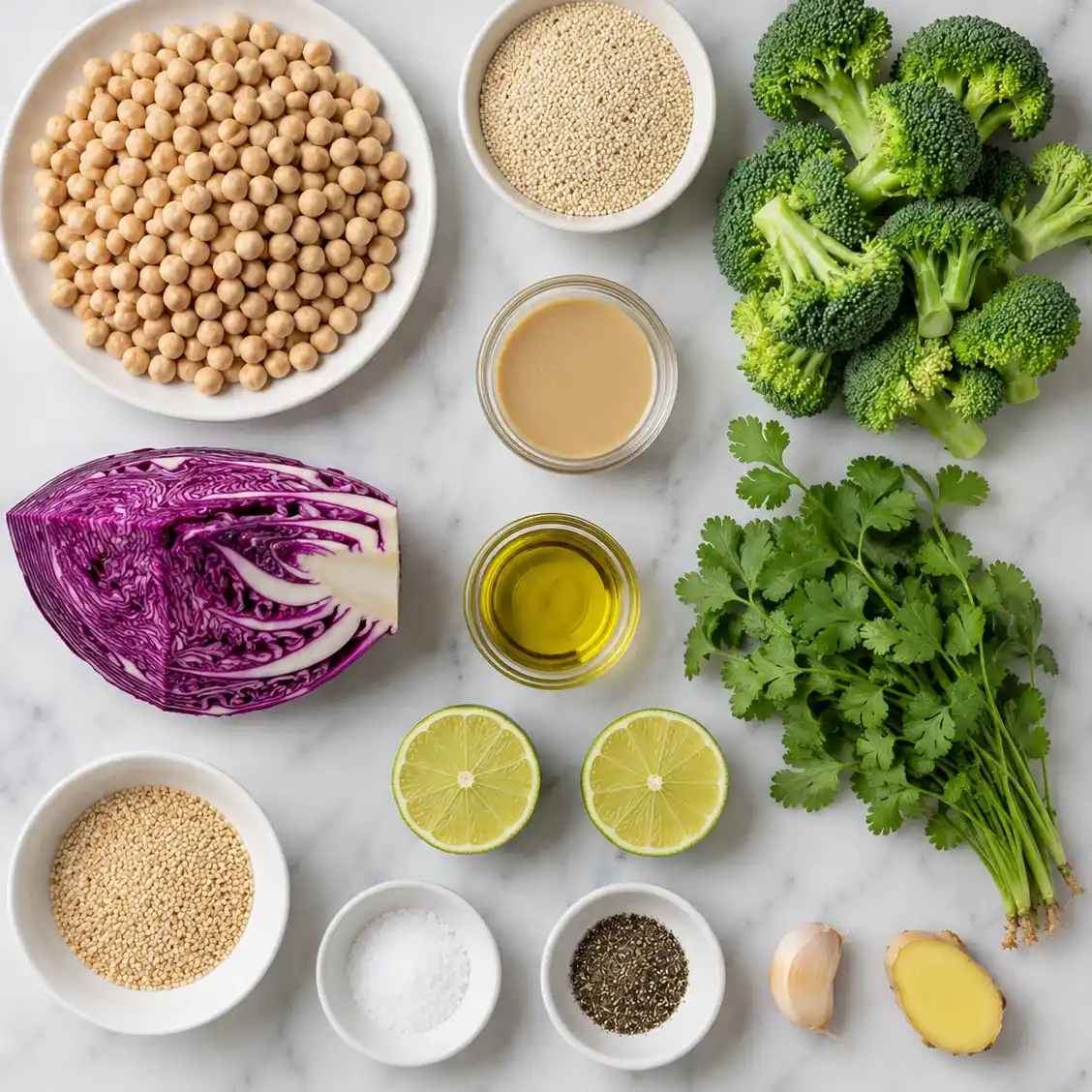
The Core Ingredients You’ll Need
The beauty of plant-based meal prep is that you probably already have most of these in your pantry. Here’s what makes the magic happen:
Protein foundations: Dried or canned lentils (red, green, and brown all bring different textures and cook times), chickpeas, black beans, firm tofu, and tempeh. Each one brings roughly 15 to 20 grams of protein per cooked cup, and they’re all cheaper than practically any other protein source.
Whole grains: Brown rice, farro, or quinoa add structure and more plant protein. Don’t skip the grain, it’s not filler. It’s carbs your body actually needs, especially if you’re active.
Vegetables: Load up on whatever’s in season. Roasted broccoli, sautéed spinach, shredded carrots, diced peppers, roasted sweet potato. They add volume, nutrients, and satisfaction without many calories.
Flavor builders: Garlic, ginger, tamari, rice vinegar, tahini, coconut milk, nutritional yeast. These are what separate “eating healthy” from “actually enjoying dinner.”
Healthy fats: Olive oil, seeds, and nuts in small amounts. They’re calorie-dense, but they’re also crucial for absorbing fat-soluble vitamins and keeping you satisfied.
How to Build Your High-Protein Plant-Based Meal Prep Bowls
The method is straightforward, and once you do it once, you’ll speed up dramatically.
Step 1: Choose your base grain. Cook a large batch of brown rice, quinoa, or farro according to package directions. I usually make about 4 cups cooked grain, which gives me roughly five generous bowls. Fluff it with a fork and let it cool slightly before dividing into containers.
Step 2: Prep your legume protein. If you’re using canned beans or lentils, drain, rinse, and set aside. If you’re cooking from dried, do that the night before or use a pressure cooker to speed things up. Season them simply with a pinch of salt, garlic powder, and black pepper. You want them flavorful but not overpowering, so the other elements can shine.
Step 3: Sauté or roast your vegetables. Cut harder vegetables into bite-sized pieces, broccoli florets, carrot sticks, bell pepper chunks. Toss with a light coating of olive oil, salt, and pepper. Roast at 425°F for about 20 minutes until golden and tender. Softer vegetables like spinach or tomatoes can go raw or get a quick sauté. This step is where flavor happens, so don’t rush it or you’ll end up with boring meal prep.
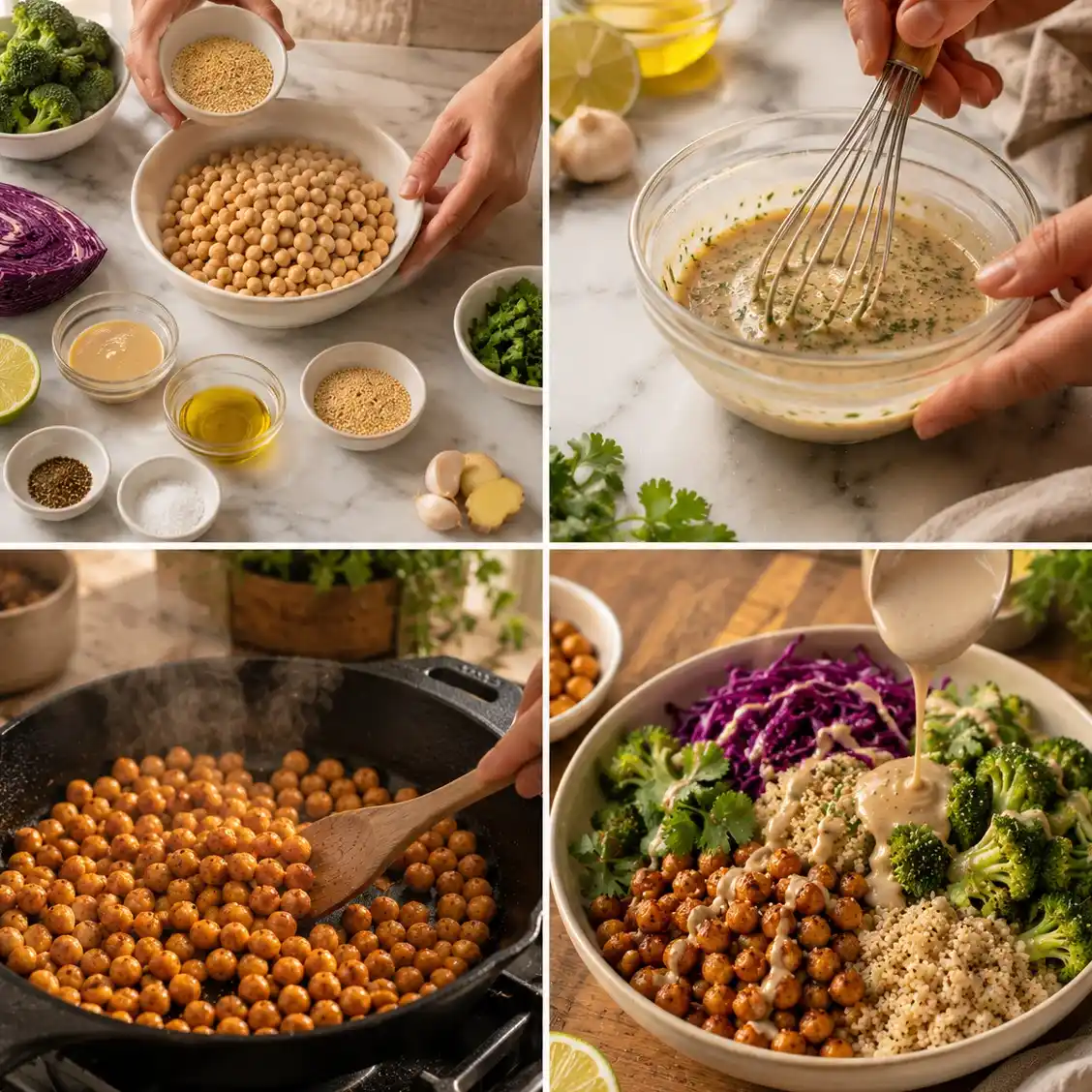
Step 4: Cook your tofu or tempeh if using. Press extra-firm tofu between paper towels with a heavy weight for 15 minutes to remove excess moisture. Cut into cubes or slabs, then pan-fry in a bit of oil over medium-high heat until golden on all sides, about 8 to 10 minutes total. Season generously, tofu is a blank canvas and it needs bold flavors. Tempeh has more flavor naturally, so a simpler seasoning works.
Step 5: Make a simple sauce. Whisk together tahini, lemon juice, minced garlic, a splash of water to thin it, and salt. Or combine tamari, rice vinegar, sesame oil, and a pinch of ginger for an Asian-inspired version. You want enough sauce to coat everything lightly but not so much that your containers turn into soup by Wednesday.
Step 6: Assemble and store. Divide your grain among five containers, then top with legumes, roasted vegetables, and tofu or tempeh. Drizzle sauce over everything. Store in airtight containers in the refrigerator for up to five days. The flavors actually improve overnight as everything gets to know each other.
Emma’s Meal Prep Hacks That Actually Work
Embrace the slow cooker or Instant Pot for beans. If you’re cooking dried legumes, these tools are absolute time-savers. You can prep everything else while beans simmer hands-off. I usually cook a huge batch on Sunday afternoon and freeze half for the following week.
Season your grains while still warm. This is the single most important tip for meal prep that doesn’t taste like cardboard. Mix a tiny bit of oil and acid (lemon juice or vinegar) into your warm grain before it cools. It absorbs the flavor instead of sitting on top tasting like nothing.
Keep sauce separate or mix it in modestly. If you’re prepping for the full week, underdress your bowls slightly on day one and keep extra sauce in a small container. This way, your vegetables stay crisp and your grain doesn’t turn mushy. Mix more in as you go through the week.
Variations to Keep Things Interesting
Mexican-inspired: Black beans, cilantro-lime rice, roasted sweet potato and peppers, topped with avocado and a squeeze of lime.
Mediterranean: Chickpeas, brown rice, roasted eggplant and zucchini, cherry tomatoes, fresh herbs, and a lemon-tahini dressing.
Asian-style: Lentils, quinoa, steamed broccoli and bok choy, shredded carrots, topped with sesame seeds and a tamari-ginger sauce.
The template stays the same. You’re just rotating vegetables and changing the seasoning profile. This keeps meal prep from feeling monotonous while staying completely manageable.
What to Pair With Your Meal Prep Bowl
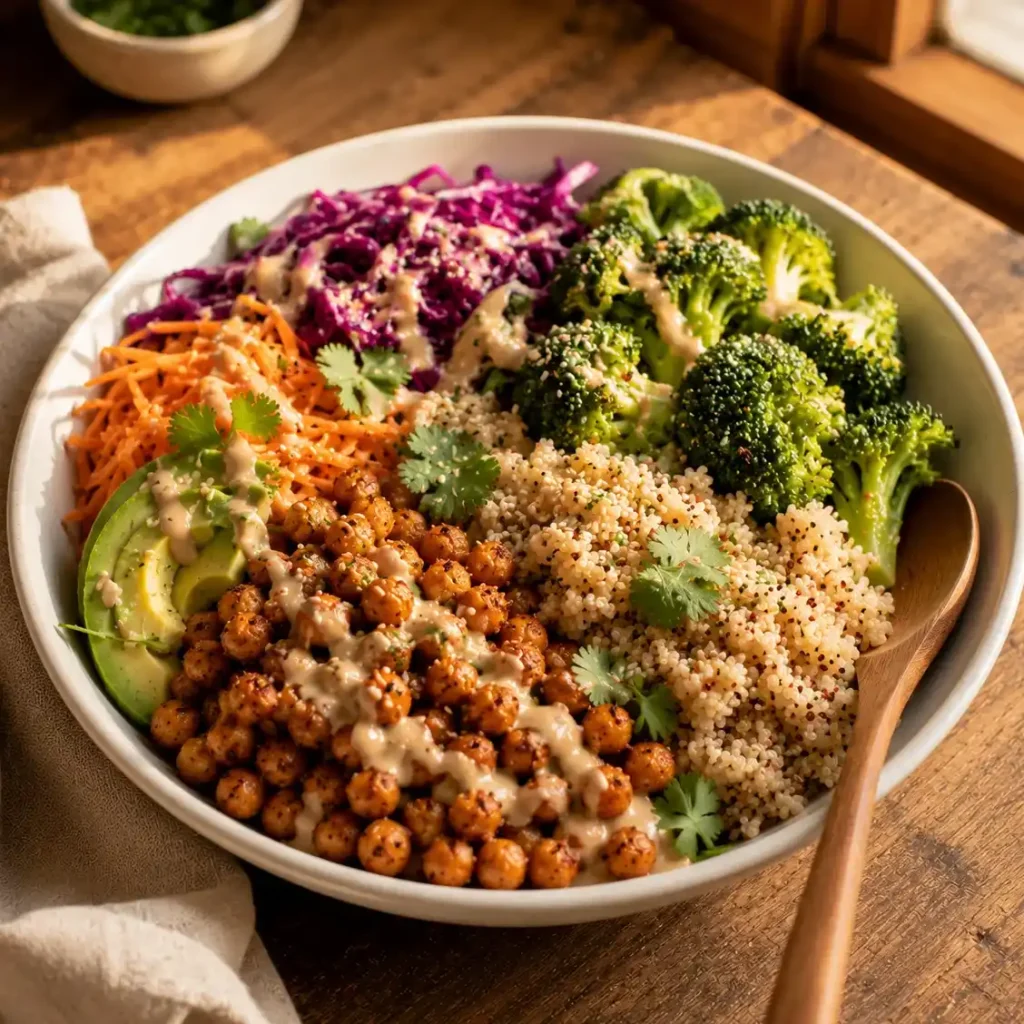
These bowls are honestly complete meals on their own, but here’s what I usually add depending on what sounds good that day:
Extra vegetables: A big handful of fresh greens or a side salad adds more volume and keeps you feeling full longer without extra calories.
Fruit: A piece of fruit or side of berries gives you natural sweetness and more fiber. It pairs especially well with Mexican or Asian-flavored bowls.
Nuts or seeds: A small handful of almonds, pumpkin seeds, or sunflower seeds adds crunch and healthy fats. About a quarter cup is the sweet spot, enough to add satisfaction without going overboard on calories.
You might also explore plant-based protein bowl recipes that offer different flavor combinations and prep methods for variety throughout your week.
How to Store and Reheat Without Losing Quality
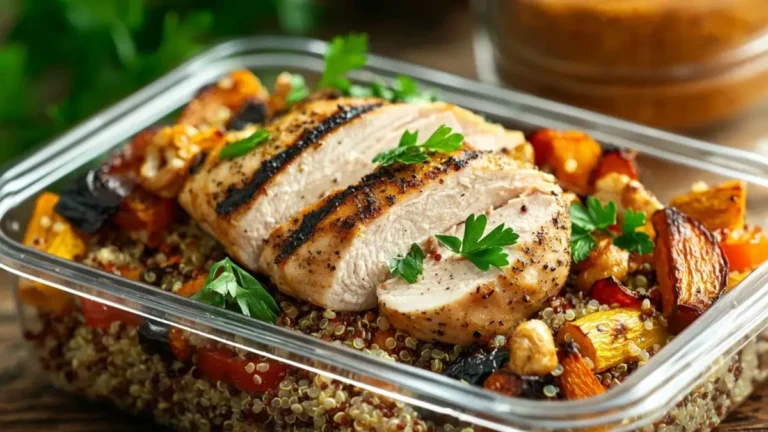
The key to meal prep that lasts all week is proper storage. Use airtight glass containers if possible, they keep food fresh longer than plastic and don’t stain or absorb odors. Arrange everything so heavier items sit at the bottom and delicate items (like fresh herbs or avocado) sit on top where you can easily add them fresh if you prefer.
To reheat, simply pop the container in the microwave for 60 to 90 seconds. If your microwave heats unevenly, stir halfway through. The whole thing comes together hot and fresh-tasting. Alternatively, you can eat these cold straight from the fridge if you prefer, though warm is usually more satisfying.
The sauce is your secret weapon for reheating. A drizzle of extra sauce mixed in right before eating masks any drying out and brings everything back to life.
Frequently Asked Questions About Plant-Based Meal Prep for Weight Loss
How much protein am I actually getting per serving?
A typical bowl with one cup cooked grain, one cup cooked legumes, four ounces of tofu, and vegetables delivers roughly 28 to 32 grams of protein. That’s plenty to keep you satisfied and support your fitness goals on a plant-based diet.
Can I freeze these bowls?
Absolutely. Leave them in the fridge for up to five days for best quality, but you can also freeze individual containers for up to two months. Thaw overnight in the fridge and reheat. The texture stays solid.
What if I don’t like tofu?
No problem. Just use more legumes or add tempeh instead. You could also use store-bought plant-based sausage or even nuts and seeds for variety. The protein still adds up.
Is this expensive to do every week?
Not at all. Dried beans cost pennies per pound. Brown rice and quinoa are similarly affordable. Even organic tofu usually costs less than $3 per serving. You’re looking at roughly $12 to $15 for a week’s worth of five meals.
Can I meal prep raw vegetables separately?
Yes, and honestly, many people prefer to. Prep your roasted elements in containers, then keep raw vegetables in a separate container. Assemble fresh each morning if you want maximum crunch. It’s a bit more work, but some people find it worth it.
What if I get bored eating the same thing for five days?
Make two different flavor profiles instead of one. Prep half your containers with Mexican-inspired seasonings and the other half with Mediterranean. Same base ingredients, totally different experience. Or change your sauce and fresh toppings midweek to shake things up.
You can also check out cheap plant-based meal prep strategies that help you stretch your budget while keeping variety high throughout the week.
The Real Reason This Works for Weight Loss
Plant-based meal prep for weight loss works because it removes the decision fatigue that derails most people. When healthy food is literally sitting in your fridge ready to eat, you’re far more likely to choose it over whatever else is calling your name at 6 PM on a Wednesday.
It also works because you’re building meals that actually fill you up. Legumes plus whole grains plus vegetables equals fiber, volume, and satiety. You’re not eating tiny portions and fighting hunger all week. You’re eating real, substantial food that happens to support your goals.
The third reason? You’re not restricting anything or eliminating foods you love. You’re just organizing what you eat so it serves you better. That’s sustainable in a way that restrictive dieting simply isn’t.
Make a batch this weekend and notice how different the week feels when healthy food is the easiest choice. Once you taste how good plant-based protein meal prep can be, you’ll understand why meal prep becomes your secret weapon instead of another thing on your to-do list.
Save this recipe and pin it to your Pinterest board for next week’s prep session. Your future self will thank you.
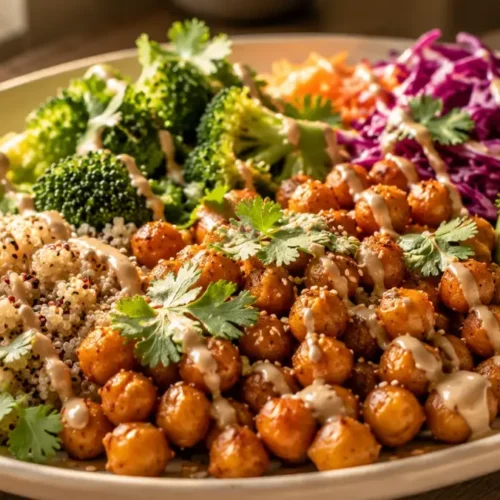
High Protein Plant-Based Meal Prep for Weight Loss (Vegan-Friendly)
Equipment
- large skillet
- baking sheet
- mixing bowl
- food containers
- fork
Ingredients
- 4 cups cooked brown rice, quinoa, or farro
- 2 cups cooked lentils or chickpeas
- 2 cups firm tofu or tempeh, cubed
- 3 cups mixed vegetables (broccoli florets, carrots, bell peppers, sweet potato)
- 2 tablespoons olive oil
- Salt and black pepper to taste
- Garlic powder
- 3 tablespoons tahini
- 2 tablespoons lemon juice
- 2 cloves minced garlic
- Water for thinning sauce
- 2 tablespoons tamari
- 1 tablespoon rice vinegar
- 1 teaspoon sesame oil
- Ginger to taste
Instructions
- Step 1: Cook a large batch of brown rice, quinoa, or farro according to package directions (about 4 cups cooked). Fluff with a fork and let cool slightly before dividing into containers.
- Step 2: Prepare legume protein by draining and rinsing canned beans or lentils. Season simply with salt, garlic powder, and black pepper.
- Step 3: Cut vegetables into bite-sized pieces and toss with olive oil, salt, and pepper. Roast at 425°F for 20 minutes until golden and tender.
- Step 4: Press extra-firm tofu between paper towels with weight for 15 minutes. Cut into cubes and pan-fry in oil over medium-high heat for 8-10 minutes until golden on all sides. Season generously.
- Step 5: Make sauce by whisking together tahini, lemon juice, minced garlic, and water, or combine tamari, rice vinegar, sesame oil, and ginger.
- Step 6: Divide grain among five containers and top with legumes, roasted vegetables, and tofu. Drizzle sauce over everything and store in airtight containers in refrigerator for up to five days.